School Of Mathematics Nigeria LMS

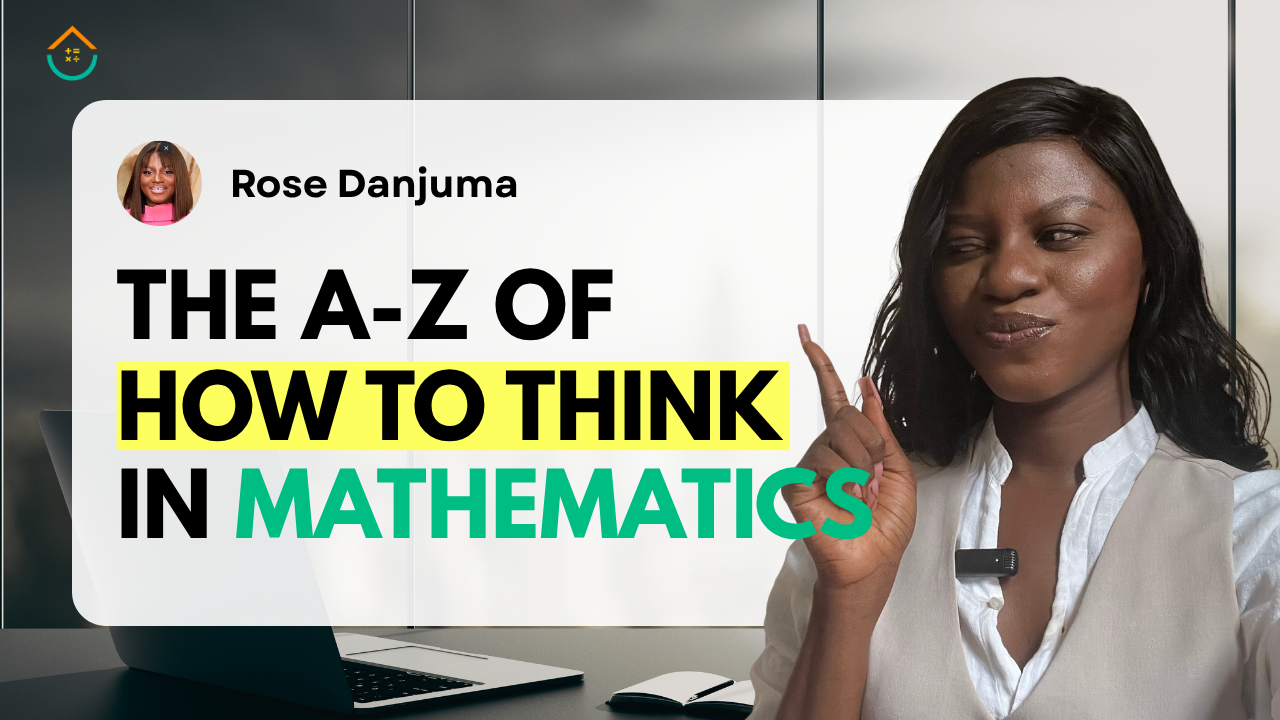
A to Z on How to Think in Mathematics

- Description
- Curriculum
- Reviews
Mathematics is more than numbers, formulas, and calculations. It is a way of thinking.
A–Z of How to Think in Mathematics is a beginner-friendly course designed to help learners discover the ideas, habits, and principles behind mathematical thinking.
Through a series of short, engaging lessons from A to Z, you will explore mathematical concepts and ways of thinking that connect mathematics to everyday life, science, technology, data, AI, and problem-solving.
You will learn to look beyond simply getting the right answer and begin to ask better mathematical questions, recognise patterns, challenge assumptions, analyse information, and approach problems from different perspectives.
From Abstraction, Bias in Data, Calculus, and Dimensional Thinking to the concepts that follow throughout the alphabet, each lesson introduces an idea in a simple and relatable way.
This course is for anyone who wants to understand mathematics differently, whether you are a student, educator, STEM enthusiast, or simply curious about how mathematics shapes the way we think.
Mathematics is a way of seeing the world.

-
No prior advanced knowledge of mathematics is required.
-
Basic familiarity with numbers and everyday mathematical ideas is helpful.
-
An open mind and willingness to think, question, and explore are all you need.
This course is designed for:
-
Secondary school students who want to develop stronger mathematical thinking skills.
-
University students and beginners interested in mathematics and STEM.
-
Teachers and educators looking for new ways to think about and explain mathematics.
-
Learners interested in data, AI, science, technology, and problem-solving.
-
Anyone who wants to understand mathematics beyond formulas and calculations.

