
Just last week, May 1–2, some of the greatest mathematical minds on the planet gathered at Stanford University for something called the Future of Mathematics Symposium.
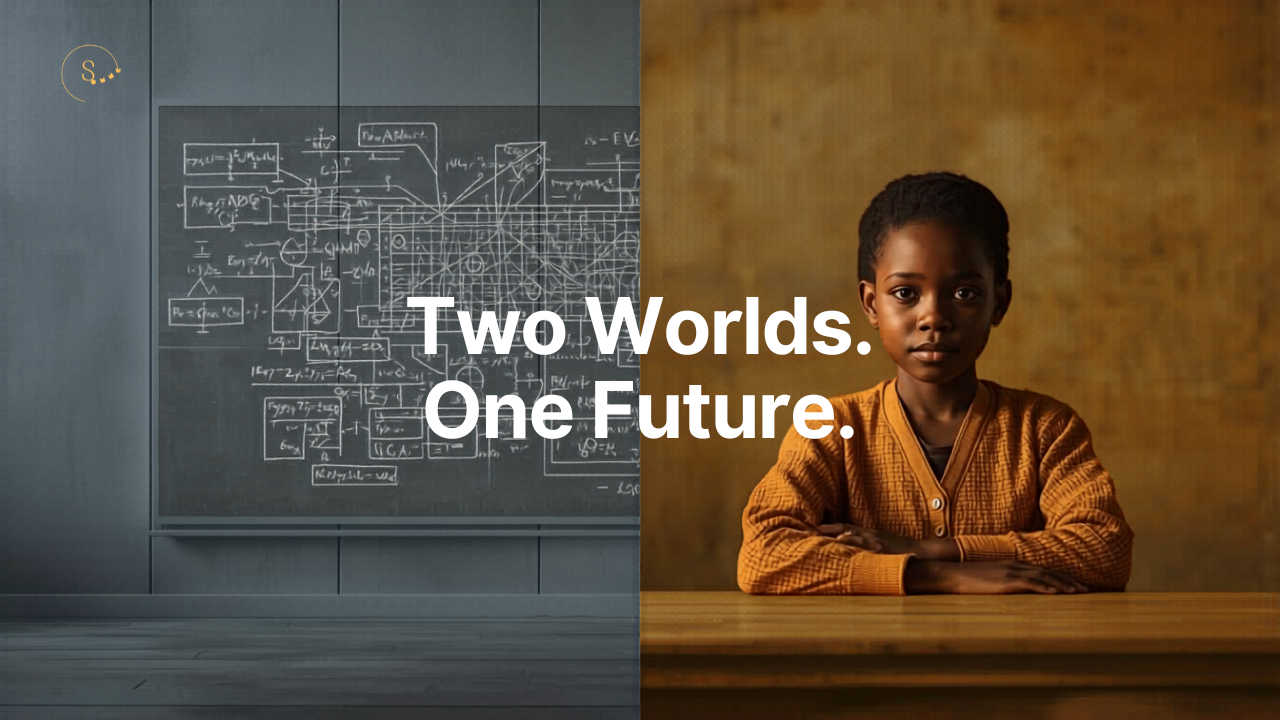
Three Fields Medalists. Researchers from OpenAI and DeepMind. Dozens of mathematicians and computer scientists. Two days. One big question: What happens to mathematics when AI enters the room?
One speaker described a particular scenario, where AI could verify mathematical proofs that even humans don’t fully understand as “one of the most fascinating and exciting events… kind of like space aliens landing.”
So what actually happened at Stanford?
AI is already changing how mathematics is done. Researchers are using it to check proofs, explore patterns, and generate ideas faster than ever before.
But the hardest parts of mathematics, deciding what questions matter, understanding why something is true, and building intuition, those remain human. One OpenAI researcher said it plainly: “Maybe we can outsource thinking in the next few years, but understanding is something you cannot outsource.”
That line matters more than it sounds.
Now bring it back to Nigeria.
While Fields Medalists debated the future of formal mathematics at Stanford, we are still fighting a different battle.
Over 60% of Nigerian students fail mathematics in WAEC.
AI arriving in mathematics doesn’t solve that. If anything, it raises the stakes.
Because if the rest of the world is moving toward AI-assisted mathematical thinking, and our students are still struggling with the foundations, the gap doesn’t just stay the same. It widens.
This is why curriculum design is not a small thing.
At the School of Mathematics Nigeria, when we sit down to build a mathematics curriculum, whether for a school, an NGO, or a government program, we are not just writing lesson plans. We are making decisions about what a child believes is possible for them.
The examples we choose. The language we use. The problems we set. The woman mathematician we reference. The local context we bring in.
All of it sends a signal to the student: this was made for you. You belong here.
That’s the work Stanford doesn’t talk about, because they are solving a different problem.
The question I want to leave with you:
The researchers at Stanford are asking: how do we make AI understand mathematics?
We are asking: how do we make a 14-year-old girl in Abuja believe she can pass her Math in WAEC or JAMB?
Both questions matter. But only one of them determines whether the next Maryam Mirzakhani comes from Nigeria.
We think she can. We’re building the system to prove it.
At the School of Mathematics Nigeria, we design structured, context-driven mathematics curricula for schools, NGOs, and institutions across Africa. If you’re building a learning program that works, not just on paper, but in real classrooms, we’d love to talk.
